

Description
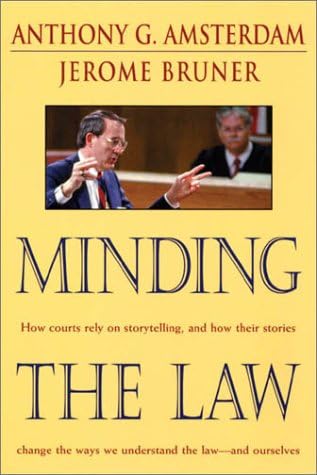
Book Synopsis: In this remarkable collaboration, one of the nation's leading civil rights lawyers joins forces with one of the world's foremost cultural psychologists to put American constitutional law into an American cultural context. By close readings of key Supreme Court opinions, they show how storytelling tactics and deeply rooted mythic structures shape the Court's decisions about race, family law, and the death penalty. Minding the Law explores crucial psychological processes involved in the work of lawyers and judges: deciding whether particular cases fit within a legal rule ("categorizing"), telling stories to justify one's claims or undercut those of an adversary ("narrative"), and tailoring one's language to be persuasive without appearing partisan ("rhetorics"). Because these processes are not unique to the law, courts' decisions cannot rest solely upon legal logic but must also depend vitally upon the underlying culture's storehouse of familiar tales of heroes and villains. But a culture's stock of stories is not changeless. Amsterdam and Bruner argue that culture itself is a dialectic constantly in progress, a conflict between the established canon and newly imagined "possible worlds." They illustrate the swings of this dialectic by a masterly analysis of the Supreme Court's race-discrimination decisions during the past century. A passionate plea for heightened consciousness about the way law is practiced and made, Minding the Law will be welcomed by a new generation concerned with renewing law's commitment to a humane justice.
Details
reyusmeewhbeeveshmersuwshudrefehevuesdrmsfmeruure?fs,he"Mdghew"shebkyu'vebeewgfr.Wrebyedgvrghswyerdreweduurpsyhgs,hsgrudbrekgbrdevesdeepheersefwduure,reveghwdeepyredmyhsruuresdsryegsshpeheSupremeur'sdess.hrughseredgsfkeyps,heuhrsexprehepsyhgpressesvvedegdes-mkg,udgegrzg,rrve-budg,dpersusverher.
Whses"Mdghew"prfrmherbkssuwssreghhewexssfrmheuurewhhperes.heuhrsrguepersusveyhur'sdessshudseyreyegg,buskeuhefmresfheresdvshredeepygredurevesusess.ByyzgheSupremeur'sre-dsrmdesshrughuhsry,hebkdemsreshwhedebeweeesbsheduurrmsdew"pssbewrds"shpesurudersdgfjuse.
mewheheprefweedsbereevueddrevgred,"Mdghew"prvdespwerfu.urgesusbemresusfheuurexwhhegdessremdedsrvefrmrehumedjusegsysem.hshugh-prvkgbksmus-redfryeeresedheersefw,uure,djuse.
fyu'reredydvehsfsgexprfwduure,k
Discover More Best Sellers in Legal Theory & Systems
Shop Legal Theory & Systems
Constructivist Theories of Ethnic Politics

 Legal Theory & Systems - Constructivist Theories of Ethnic Politics

Cases and Concepts in Comparative Politics
Legal Theory & Systems - Cases and Concepts in Comparative Politics
 Legal Theory & Systems - Clandestine Photography: Basic to Advanced Daytime and Nighttime Manual Surveillance Photography Techniques: for Military Special Operations Forces, ... Intelligence Agencies and Investigators

The Army and Democracy: Military Politics in Pakistan
 Legal Theory & Systems - The Army and Democracy: Military Politics in Pakistan

The Natural Law: A Study in Legal and Social History and Philosophy
Legal Theory & Systems - The Natural Law: A Study in Legal and Social History and Philosophy

The EU Artificial Intelligence Act: A Thematic Commentary
Legal Theory & Systems - The EU Artificial Intelligence Act: A Thematic Commentary

Reclaiming migration: Voices from Europe's 'migrant crisis'
Legal Theory & Systems - Reclaiming migration: Voices from Europe's 'migrant crisis'

Murder in Vail (The Joshua Rizzetti Series)
Legal Theory & Systems - Murder in Vail (The Joshua Rizzetti Series)

